About Mugdoodle
Mugdoodle is a small web tool that turns one photo into a caricature. The Mugdoodle team builds it, tests it and answers the mail. We keep it simple, and we say plainly what it cannot do.
By The Mugdoodle team (Product and testing). Last updated .
Who runs Mugdoodle
The Mugdoodle team is a small group that builds single-purpose web tools. We write the style prompts, pick the limits and read every message from the contact form. So when a page here says "we", it means the people who also fix the bugs.
We are not caricature artists, and the tool is not one either. An image model draws each picture from your photo and from a prompt that we wrote. That is why we call the result a drawing from a model, never hand-made art.
How the tool works
You upload one photo and pick one of ten styles. Then our server shrinks a copy of the photo and sends it to Google Gemini 2.5 Flash Image, together with the prompt for that style. If you typed a job or hobby, one more line asks for a fitting outfit and props.
Every prompt ends with the same rules. They ask the model to keep each person recognizable, with the same hairstyle, hair color, skin tone, glasses and facial hair. They also ask for friendly exaggeration, never a cruel one, and for no text in the picture.
How we test
We test with three photos: a woman, a man and a couple. All three are illustrative. An image model made them from a text prompt, so they show no real person. As a result, nobody's face sits on this site without consent.
On October 13, 2026 we drew sixteen caricatures from those photos. The woman went through all ten styles. In addition, we tried themes such as nurse, software developer and guitar player, and we drew the couple twice. The style text was the same text that the code on this site uses.

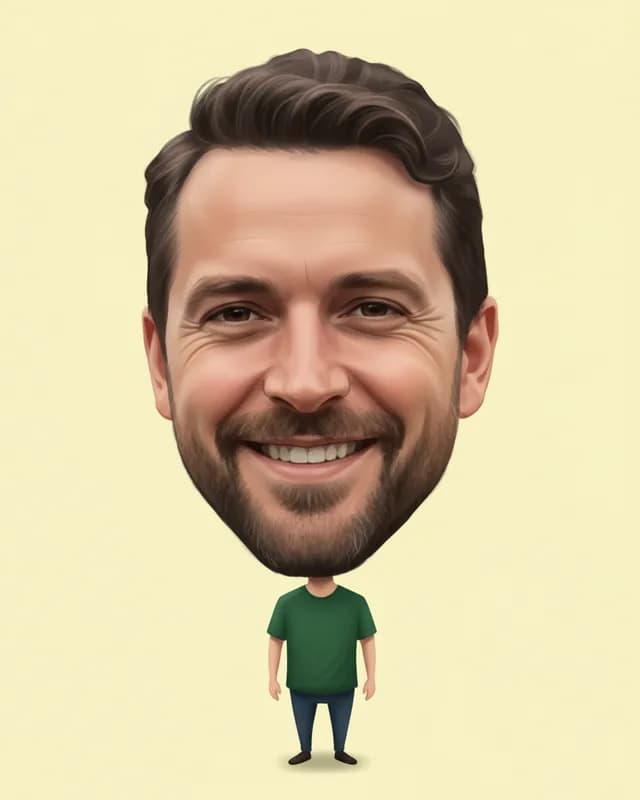
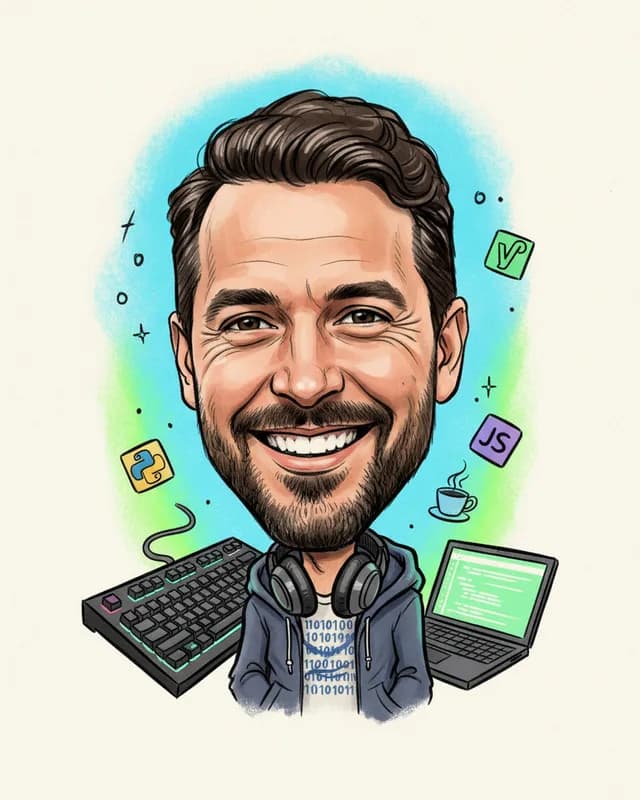
Then we compare each caricature with its photo by hand. We check five things. First, the number of people must match. Second, hair, glasses, facial hair and skin tone must carry over. Third, the exaggeration must stay friendly. Fourth, the old background must be gone. Last, the picture should hold no text.
What the tests showed
Not every result passes cleanly, and we say so. For example, the software developer sample shows small symbols and a few letters on its props. The Classic style also turned a closed smile into a wide grin. We therefore describe those quirks on the pages where they matter.
Two more limits are worth knowing. For this first set, we called the model directly with our prompts, and not through the upload box. Also, ten of the sixteen came before we added two sentences to the shared rules, about the oversized head and the replaced background. So a fresh run may exaggerate a little more than those samples. Finally, we have not measured the drawing time yet, which is why no page quotes one.
Your photo
Our server keeps your photo in memory for one request and forgets it as soon as it sends the result back. The photo does travel to Google for the drawing. However, we keep no copy, build no gallery and train nothing on your pictures. You can read the details in our privacy policy.
What the tool is built with
The site runs on Next.js. The open-source library sharp reads your upload, shrinks it and adds the watermark. Google Gemini 2.5 Flash Image does the drawing. Because we rely on these projects, we link to them below.
Get in touch
Do you have a question, a bug report or a partnership idea? Then write to us on the contact page, because we read every message.